


How to know if your contact is inside out
Contact lenses have an uncanny ability to turn themselves inside out like umbrellas in the wind. But you don't need a monsoon to tell if a lens is doing a contortion act. Here's how to know if your contact is inside out:
-
Check the shape.
-
Look for markings.
-
Note if the tint is bright or faded.
-
Consider how the lens feels in your eye.
Let's decode these clues, so you're not squinting, blinking, and guessing if your contact is the right way. Give the lens a once-over, pop it into place, and prepare to conquer the day. Or start slowly and have some coffee first, like us normal folk.
How to tell if a contact is inside out
Contact lenses are shaped to curve around your eyeball and fit comfortably. But this only works if the contact is right side out. Flip it the wrong way, and chances are your eyeball will protest about the foreign object on its surface.
Sure, you can pull that lens out and try again, but save yourself the hassle by doing a fit check before placing the lens in your eye. Here's how to know if a contact is inside out:
-
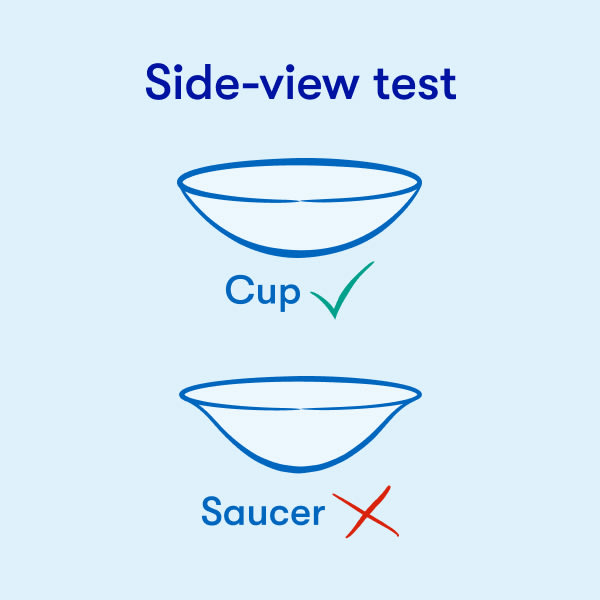
Side-view test. Place the contact lens on the tip of your finger and take a close look. A right-side out contact looks like a cup or slightly stretched letter "U", with the edges pointing straight up. An inside-out lens has edges that curl slightly outward, similar to a saucer. The distinction can be subtle, so go ahead and turn it inside out a few times until you can see the difference.
-
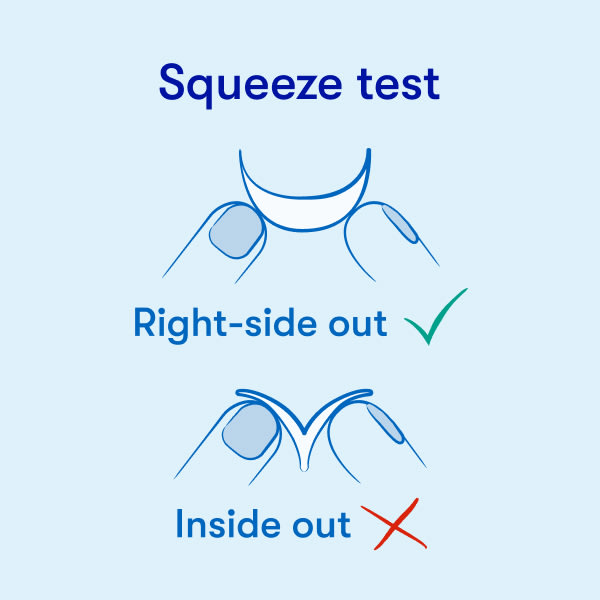
Squeeze test. Another option is to gently pinch the lens between your finger and thumb. If the edges gravitate toward each other like BFFs who haven't seen each other since yesterday, the lens is right side out. And if they turn away from each other, the lens is reversed. Set things straight and restore the love.
-
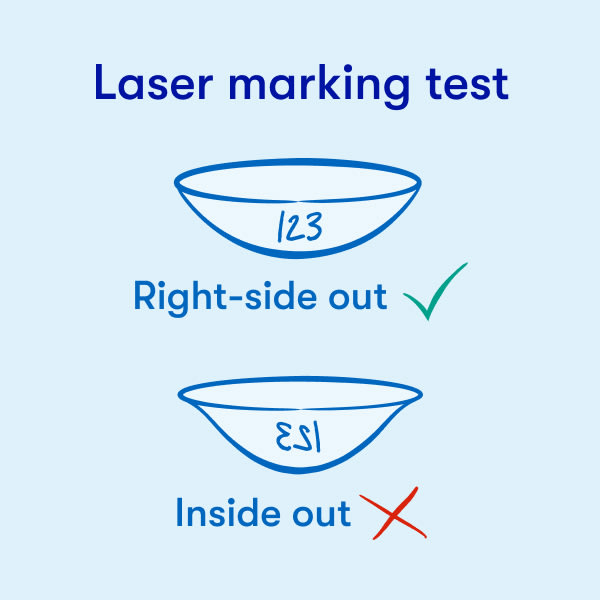
Laser marking test. Some contact lenses, like ACUVUE OASYS, have inside-out markings etched on them. Don't worry, they're not a cryptic message from the CIA, so put away your secret decoder ring. Hold the lens up to the light, rotate it, and look through it for telltale symbols. If you see numbers or letters facing the right way, you're good to go. If the markings are backward, the lens is inverted.
-
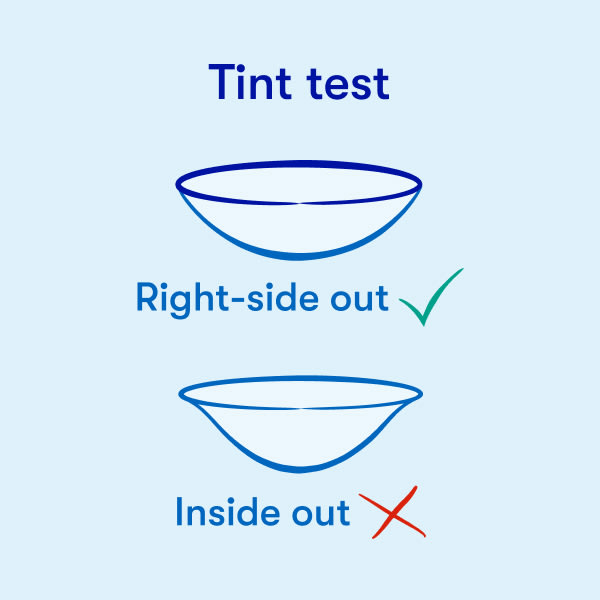
Tint test. Some manufacturers know the struggle is real and add tint so you know if your contact is inside out. We're not talking about colored contact lenses that make your brown eyes blue, but a hint of color, usually on the lens rim. The tint is slightly bolder if the lens is right side out than if it's not.
Your lens might escape while you're inspecting it. If you drop your contact on the floor, clean it before inserting it in your eye. When your lens has passed the tests with flying colors, go ahead and put in your contacts.
What does a contact feel like when it's inside out?
When your lens is inside out, it may feel unstable and cause you to blink a lot. It could also feel like there's grit or dust in your eye, resulting in itchiness, irritation, or pain. You might start tearing up even if you're not watching The Notebook.
Occasionally, a rogue lens does a sneak attack. Things seem fine at first, but when the lens starts moving around later, you'll feel like plucking it out.
Will my vision be blurry if my contact is inside out?
An inside-out contact can sometimes cause blurry vision because the lens curves away from, instead of around, your eye. Different parts of the lens are sitting on the wrong parts of your eye, altering your vision. The world might seem distant, distorted, or out of focus. Check if your lens is flipped and see if that improves things.
Learn how to order contact lenses online at 1-800 Contacts
What to do if you insert your contact inside out
Properly fitting contact lenses feel natural — you shouldn't notice they're there. If a lens is uncomfortable, take it out as soon as you can. You likely won't experience serious problems from an inside-out contact, but why put up with the discomfort and strain when you could see clearly and comfortably?
If your spidey-senses tell you your contact might be inside out:
-
Wash your hands and remove the lens.
-
Use our checklist to see if it's inside out.
-
Flip the lens the right way.
-
Clean the lens.
-
Reinsert the lens in your eye.
You should feel better once the lens is correctly placed, but it may take a moment for the irritation to go away. The good news is that an inside-out contact doesn't usually cause serious problems. If discomfort persists after you've flipped it around, check with your eye care professional.
Get contacts that work for your eyes
Contact lenses can help you achieve clear, comfortable vision, as long as they’re inserted correctly. Like your favorite sweatshirt or pair of socks, contacts have one side that should face the world head-on and another that's hidden away.
Check if your contacts are inside out before inserting them by looking at the shape, tint, or markings. This will save you from discomfort later. And if an inverted lens does sneak into your eye, don't sweat it. Just remove it and put it in the right way.
Learning to insert your contacts correctly is just one step toward seeing the world clearly, but the right fit is also important. Your eye care professional can suggest the right daily or extended-wear contacts for your eyes and lifestyle. And if you've got a prescription you love? Renew your prescription with an online vision exam at 1-800 Contacts and easily order your brand online.
See how to get free shipping on affordable lenses, as well as the time it takes to get them and how to save time and money on the entire process. How much are contact lenses? Compare the prices of daily, weekly, biweekly, and monthly contact lenses and find the best option for you. See where to order contacts online, according to price and shipping times. Compare top online retailers to find the best deal for you. Everything you need to know about contact lenses
Free shipping for contact lenses
How much do contacts cost?
Where to order contacts online
Did you know you can order contacts online?
Say goodbye to trips to the eye doctor and hello to convenience! With 1-800 Contacts, you can easily order your contact lenses online and have them delivered straight to your door. Plus, our online vision exam makes it simple to get the prescription you need without leaving home. And the best part? You’ll save money on your first order with 1-800 Contacts. It’s never been easier to get your contacts!
Original published date: 1/24/2020
Updated: 1/7/2026