


How often should you go to the eye doctor?
The official answer? It depends on your age, health, and how well your eyes have been behaving lately.
If you wear glasses or contacts, have diabetes, suffer from high blood pressure, or have a family history of general eye drama (we do not salute you), aim for once a year.
And yes, going to the eye doctor usually means getting a comprehensive eye exam — aka the full eyeball adventure. Lights, letters, possibly a puff of air that will absolutely make you flinch. Not to be confused with a vision test, which is quicker and simpler and can often be done online (possibly while wearing pajamas — just saying).
Keep reading to learn how frequently you should get a comprehensive eye exam, when a simple vision test might do the trick (yes, even one you can take in fuzzy socks), and how to know when it’s time to update your prescription — especially if you’ve recently started holding your phone at arm’s length like it’s radioactive.
Renew your prescription online with ExpressExam Renew your prescription online with ExpressExam 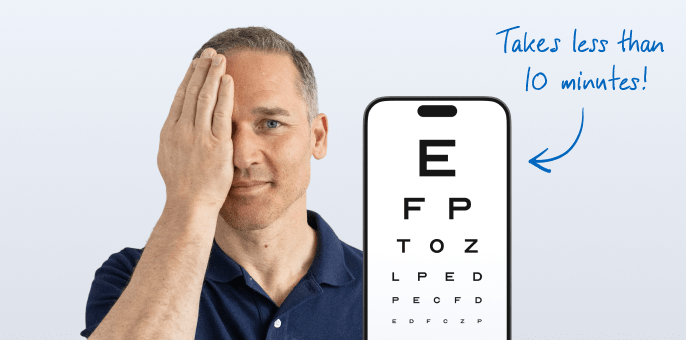
Get an online vision exam from 1-800 Contacts
Get an online vision exam from 1-800 Contacts
Why is it important to get regular eye exams?
Think of a comprehensive eye exam as the annual performance review your eyes didn’t ask for but secretly need. It’s the in-person, “huh, my depth perception is a little weird lately” kind of checkup. And while you can absolutely take a vision test online (wearing your pajama pants), that test only checks how well you’re seeing — not what’s going on behind the scenes.
Your eyes are surprisingly tight-lipped about what’s happening inside them. That’s why skipping regular checkups is like assuming your fridge is working just because the light is on — you might not notice something’s off until your metaphorical milk has gone sour.
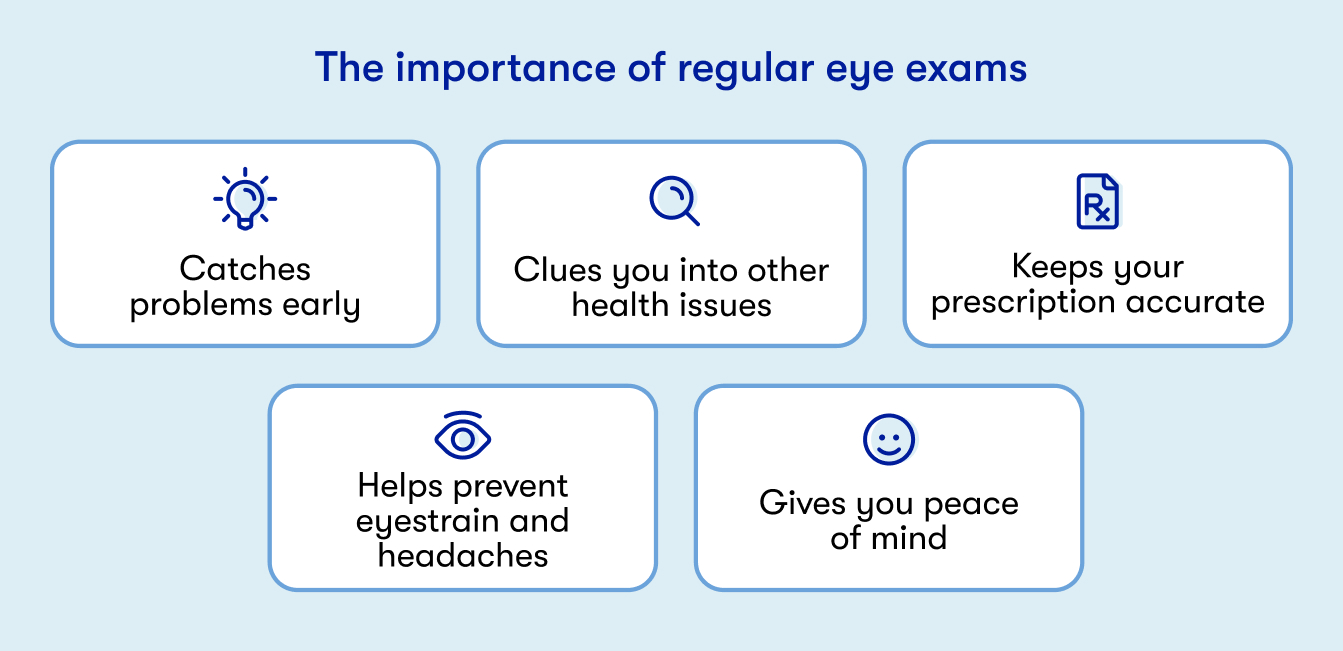
A comprehensive exam helps catch things you can’t Google your way out of.
-
It catches silent problems early: Conditions such as glaucoma, cataracts, and age-related macular degeneration often show zero symptoms until damage is already done.
-
It clues you into other health issues: Your eyes can reveal signs of diabetes, thyroid issues, high blood pressure, high cholesterol, and heart disease. It’s basically a two-for-one deal — eye check and health heads-up.
-
It keeps your prescription accurate: If you wear eyeglasses or contact lenses, your prescription doesn’t last forever (especially if you're squinting your way through group chats or movie subtitles again).
-
It helps prevent eyestrain and headaches: Even tiny vision shifts can lead to major discomfort. If your eyes feel like they’ve just pulled a 12-hour shift after a 30-minute Zoom call, it’s time.
-
It gives you peace of mind: Sometimes, everything really is fine, and isn’t that nice to know?
If your vision seems okay, just remember, so did the tire on your car right before it went flat. Some things are better caught early (and without the roadside/eyeside assistance).
How often should you get your vision checked?
Here’s a quick refresher before we get into the schedule. A comprehensive eye exam (aka the full in-person shebang) almost always includes a vision test — but a vision test alone doesn’t check for eye diseases or other unwanted situations.
Still, a standalone vision test is a great tool between exams, especially if you just need to renew your contact lens prescription or make sure things are still crystal-clear when you’re trying to read the back of the shampoo bottle.
Here’s how they stack up.
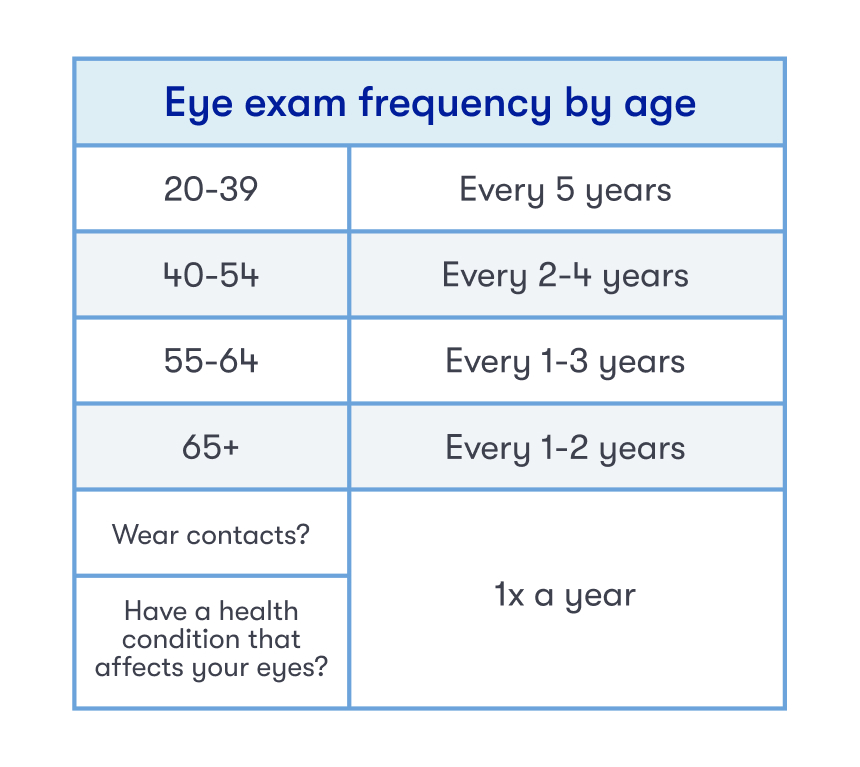
Eye exam
What’s included: Vision testing, eye pressure checks, retina and optic nerve assessments, and a peek into your overall eye health
How often:
-
Ages 20–39: Every 5 years
-
Ages 40–54: Every 2–4 years
-
Ages 55–64: Every 1–3 years
-
Ages 65+: Every 1–2 years
-
Wear contacts or have a health condition that affects your eyes? Once a year, please and thank you.
Vision test
-
What’s included: A test of how clearly you can see — usually letters on a screen.
-
How often: Every 1 to 2 years or when your vision starts feeling off, like when the subtitles get fuzzy or you start confusing your cat for your dog.
If you wear contact lenses and already know your prescription, a quick online vision test can help you renew it without leaving your couch (or taking off your hoodie). It’s not a replacement for an eye exam — but it is a very handy middle step.
How often should you have your eyes checked after 65?
Once a year is the sweet spot for getting your eyes checked after 65.
At this age, your eyes may start writing their own rules. Even if you've had perfect vision your whole life, things can change quietly and quickly. That’s why most eye care professionals recommend a comprehensive eye exam every 12 months. (Consider it a standing date with someone who knows how to use a retinal scanner.)
You're more likely to develop certain conditions as you age, including:
-
Cataracts, when the lens of your eye gets cloudy, like someone smudged your glasses but forgot to tell you
-
Glaucoma, caused by increased pressure in the eye, often with no early warning signs (a fan of the dramatic reveal)
-
Macular degeneration, affects your central vision, making it harder to read, drive, or do crosswords without accidentally creating your own language
-
Retinopathy, damage to the retina often linked to diabetes or high blood pressure, which is every bit as serious as it sounds
If you’ve already been diagnosed with any of the above, your eye care professional might recommend more frequent exams — perhaps every 6 months instead of every 12. And if you’re managing other health conditions (hi, again, diabetes or high blood pressure), your eyes may need extra attention too.
The bottom line? Once a year gives your eyes the care they need to read books, drive safely, watch your favorite shows, and spot typos before your grandkids do.
How often do you need an eye exam for contacts?
If you wear contacts, you don’t just get to plonk your glasses into a drawer and forget about eye care forever (tempting, we know). Contact lenses come with perks — but also a few nonnegotiables when it comes to eye exams.
Let’s unpack the three most common ways this question shows up and what your eyes (and your state’s regulations) expect from you.
1. How often do I need to renew my contact lens prescription?
In most states, you need a new prescription every 12 months. Some stretch it to 24 months, but those are the unicorns. The general rule? If your prescription is old enough to have voted in the last election, it’s probably time to update it.
You can take a vision test online to renew your prescription, as long as your eyes are healthy and nothing’s changed. No puff of air. No surprise dilation. Just you, your screen, and a quick check-in with your corneas.
2. What if I think my prescription has changed?
If you’re blinking more than usual, things look fuzzier, or your contacts feel like they were designed by a sandpaper enthusiast — it’s time to get checked. Even if your prescription hasn't technically expired, your eyes may have moved on emotionally.
3. Do contact lens wearers need more frequent exams?
Yes — because contact lenses sit directly on your eyeball. They’re fabulous but also high maintenance. Most experts recommend a comprehensive eye exam every year for lens wearers, even if everything feels fine. It’s how you avoid issues like corneal ulcers (which sound just as fun as they are).
Online tests are great for renewals. But when in doubt, get those eyes in front of a real human. They’re your actual windows to the world, after all.
How often do you need to check your eye prescription?
On average, once a year is a solid bet for checking your eye prescription, especially if you wear contacts. For glasses wearers, it might stretch to every 2 years if your vision hasn’t changed and you’re not hiking up the font size on your phone every few months.
But here's the thing, your eyes aren’t robots. They change with age, screen time, stress, hormones, and probably the moon (joking, unless you’re a werewolf). So, even if your current prescription still works, it might not be working well.
For contact lens wearers, yearly prescription checks are pretty much required. Contacts sit directly on your eyeball, so your eye care professional needs to confirm they’re still the right fit, shape, and power. Oh, and they’re also checking to make sure your eyes aren’t quietly staging a rebellion.
If you wear glasses only, you might get away with an exam every 2 years — but if you’re getting headaches, squinting more, or feel like your glasses have turned into decorative face jewelry? Time to book it.
In short, don’t wait for a full-on blur-a-thon. Regular prescription checks mean clearer vision, fewer headaches, and less time guessing what road signs say.
How often can you get an eye exam with insurance?
Most insurance plans that include vision care let you get a comprehensive eye exam once every 12 months. That’s the standard for employer-sponsored vision plans, individual vision insurance, and many Medicaid programs. Basically, if your plan covers vision, it probably wants you to use it at least once a year.
Here’s how it usually breaks down by insurance type:
-
Vision insurance plans. These typically cover one full eye exam per year. You may have a small copay, but most of the cost is covered. That includes checking your prescription and evaluating the overall health of your eyes.
-
Medical insurance plans. These usually don’t cover routine eye exams unless there’s a medical reason — like diabetes, high blood pressure, or a flaming case of misc eye pain.
-
Medicare. Traditional Medicare doesn’t cover standard eye exams unless you qualify under certain health conditions. Some Medicare Advantage plans include routine vision benefits, but the coverage varies wildly.
-
Medicaid. Coverage for eye exams depends on your state. Some states cover annual exams for all adults, while others limit benefits based on age or medical necessity.
Keeping your vision sharp
Your eyes have been quietly working overtime — reading tiny fonts, decoding mood via eyebrow position, pretending not to see your screen time report, and identifying whether that speck on the wall is dust or a bug (high stakes, always). They deserve a little love.
Check in. Update your prescription. Feel smug about being a responsible adult with functioning depth perception.
And if you want to do all that without leaving the couch, take an online vision test. No shoes. No waiting room. Just you, your eyeballs, and the sweet, sweet thrill of legally ordering contacts again.
With everything you can do online these days, it only makes sense that you can renew your contact lens prescription. How do online eye exams work? How long is a prescription good for? Find out when yours expires and how to renew it within minutes. Don’t let an expired prescription leave you squinting. Can you get contacts without a prescription? No. But all is not lost. Find out more about getting contacts. Everything you need to know about online vision exams

How ExpressExam really works
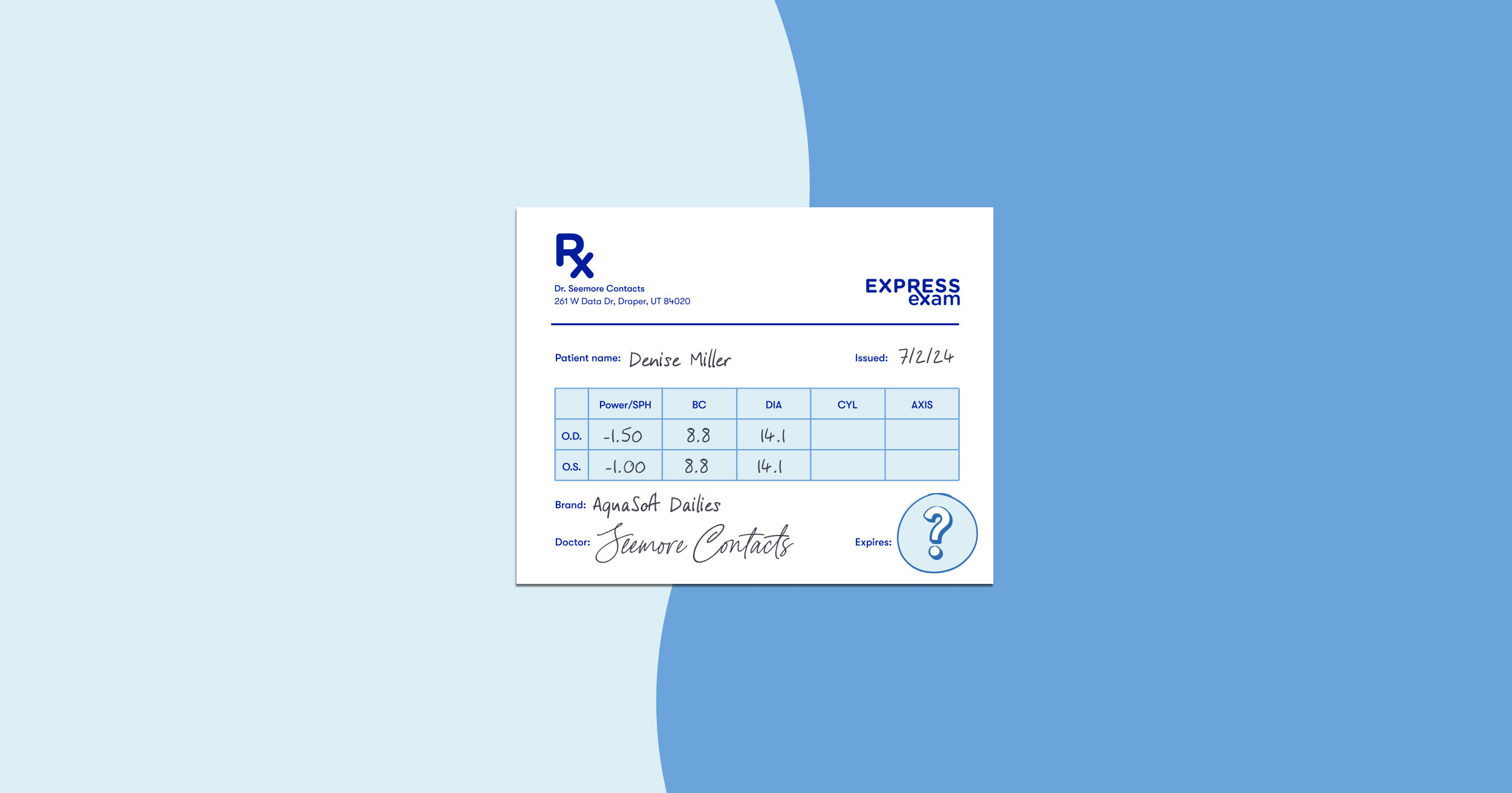
How long is my prescription good for?

Can I order contact lenses with an expired prescription?
Did you know you can order contacts online?
Say goodbye to trips to the eye doctor and hello to convenience! With 1-800 Contacts, you can easily order your contact lenses online and have them delivered straight to your door. Plus, our online vision exam makes it simple to get the prescription you need without leaving home. And the best part? You’ll save money on your first order with 1-800 Contacts. It’s never been easier to get your contacts!
Original publish date: 4/15/22
Updated date: 7/16/25
Original Author: Austin Brewer