


How to know if you need to change your eye prescription
If you're reading this article now — squinting like the sun has issued a personal attack — let’s cut to the chase: You likely need a prescription update. You have to trust your instincts. You think about food when you’re hungry and notice your feet pain when your shoes are worn. Likewise, you should consider a new prescription when your eyes need it.
But what are the exact signs that your eyes are screaming at you for a new pair of glasses or contact lens prescription? Keep reading to find out.
How do you know if your eye prescription has changed?
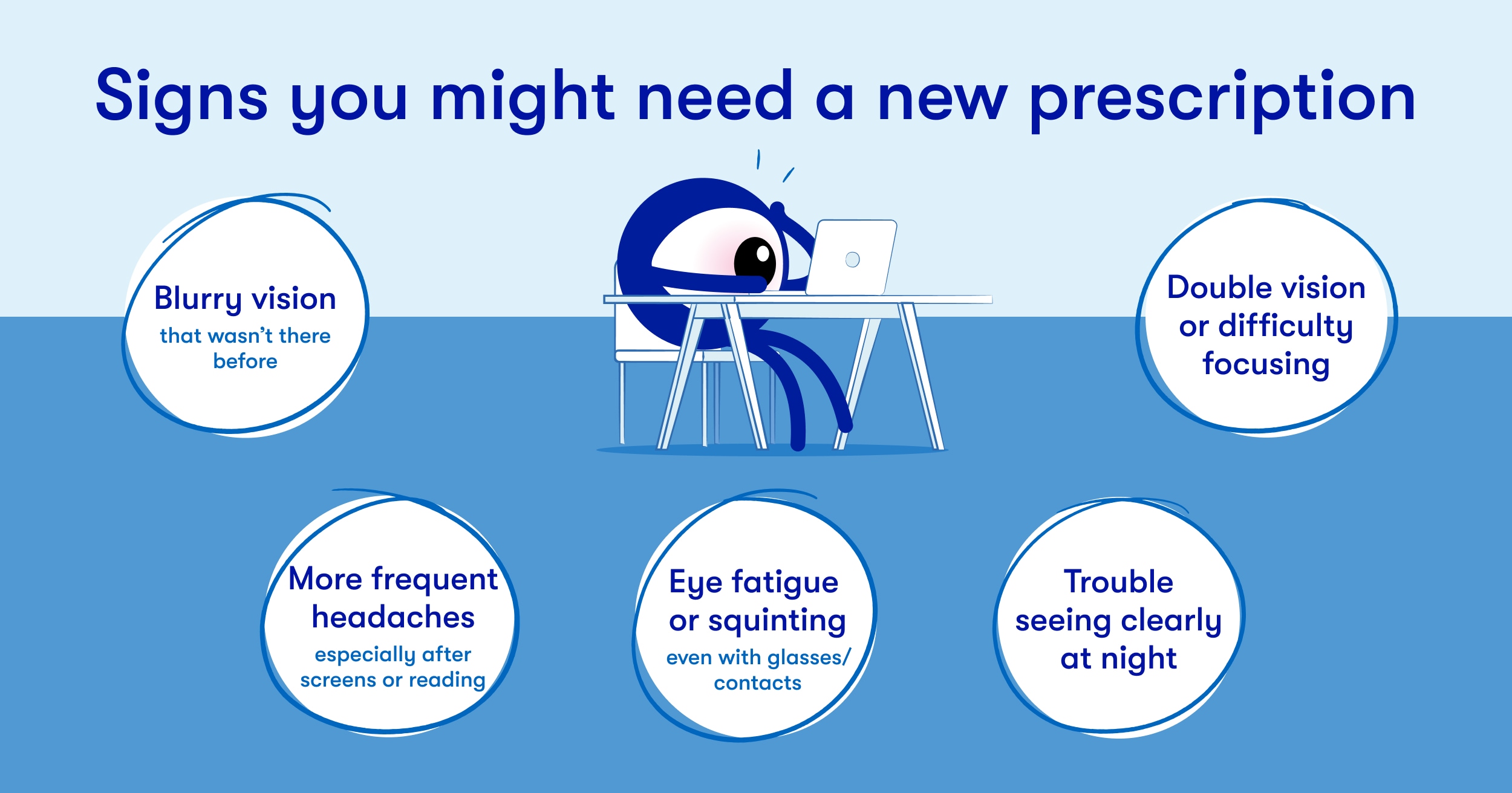
There are a few warning signs that your eye prescription no longer works for you, including:
-
Frequent blurry vision (which wasn’t regularly occurring before)
-
Frequent headaches, especially after reading a book or using a computer
-
Eye straining and eye fatigue
-
Light sensitivity
-
Difficulty focusing
-
Constantly squinting to see, even while wearing glasses or contacts
-
Double vision
-
Difficulty seeing clearly at night
Contacts and glasses can give most people 20/20, or average vision. So, if you’re experiencing any eye issues, it’s time to get your prescription checked.
What is the 10-10-10 rule for eye strain?
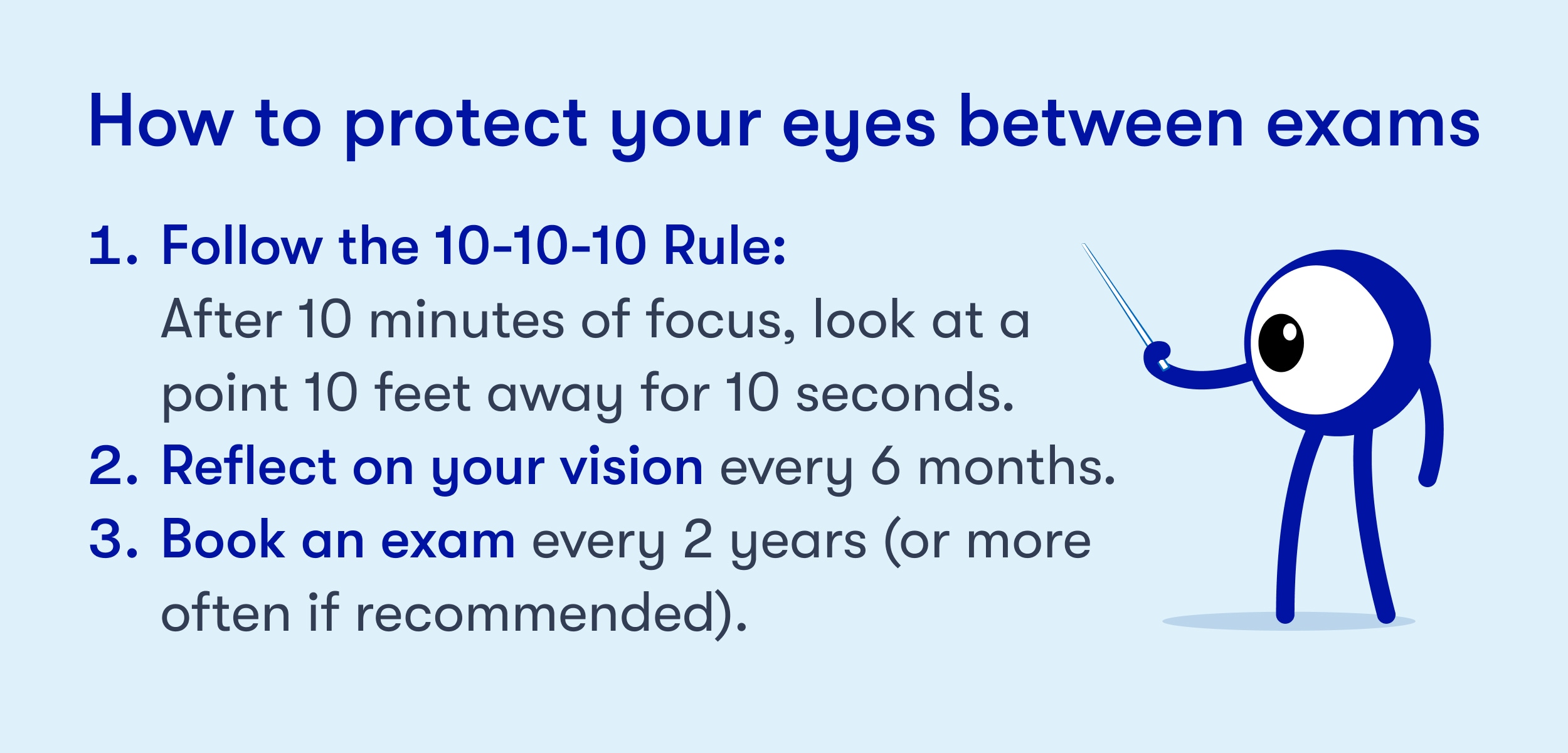
One useful habit to incorporate is the 10-10-10 rule for eye strain. This rule states that every 10 minutes, you should take a 10-second break to look at something 10 feet away. This is a micro break for your eyes that allows them to reset and activate new muscles. People who spend hours in front of a phone, TV, or screen (calling every remote worker ever), especially need to incorporate this rule.
Your eyes might naturally weaken over time, but this step can slow this down and protect your eyesight. You don’t just have to accept this downhill spiral; fight it with all your might!
When should you change your eye prescription?
The general rule is to have an eye exam every 2 years to ensure your prescription is up to date. However, individuals with eye-related conditions like diabetes may need more frequent appointments. Your eye care professional can advise you on the appropriate schedule.
You should also go in earlier if you notice a sudden change in vision or are experiencing eye issues.
Eye changes naturally happen with age. People lose bone density, gain wrinkles, and experience worsening eyesight. (It’s not all doom and gloom — you get wiser with age, right?)
Most often, changes in your prescription are gradual, so it's generally difficult to notice. It’s like gaining weight. It usually comes on slowly (thanks to that extra morning donut), and before you know it, your favorite sweater is strangely tight.
Every six months or so, set a calendar reminder to sit down and reflect on your vision. Ask yourself if you’re straining more or experiencing eye fatigue, double vision, or any other new symptoms.
How often should you get new glasses?
Whether you wear glasses or contacts, the general rule is to update your prescription every 2 years. As soon as your prescription changes, you should order new glasses or contact lenses.
Luckily, when it comes to updating your glasses, you can keep the frames and simply swap out the lenses.
Why updating your prescription matters
Listen, we’re not just adding another task to your plate for no reason. We’re not your awful boss who loves busy-work. We’re telling you to update your prescription because it really matters.
Here are some of the key reasons why you need to update your eye prescription.
Renew your prescription online with ExpressExam Renew your prescription online with ExpressExam 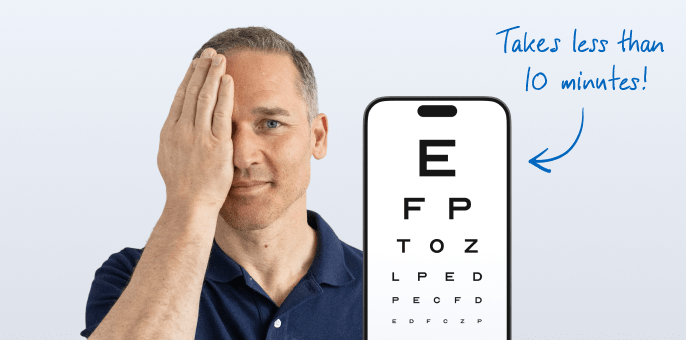
Get an online vision exam from 1-800 Contacts
Get an online vision exam from 1-800 Contacts
Ensures optimal vision
As we’ve stated, it’s natural for your vision to worsen with time. Your prescription will eventually go out of date; you just don’t know whether it will take 1 year, 2, or 3.
Regular checkups allow you to wear the correct prescription so you can do your daily tasks, such as reading and driving, with clear vision. Being able to see clearly doesn’t just improve your quality of life; it also keeps you safe when you’re walking and driving.
Prevents additional eye issues
When your prescription isn’t correct, your eyes have to work harder to see. This can lead to discomfort and additional eye issues, such as eye strain, fatigue, and difficulty seeing at night. With your eyes putting in overtime, you’re more likely to experience headaches, migraines, and blurry vision.
Take preventive measures for your eye health
Updating your prescription helps you catch sneaky eye conditions, which is why regular checkups are a key component of preventative care. Doctors can detect early signs of serious eye diseases, cancers, cataracts, glaucoma, and macular degeneration. The earlier you catch these issues, the better the chance of a successful treatment plan.
Additionally, remember your eyes are a part of your overall health. An eye exam can reveal warning signs of other health issues, such as diabetes, high blood pressure, and autoimmune diseases.
If you’ve been delaying that prescription update because you can’t bring yourself to visit an eye doctor appointment, you have no excuses now. 1-800 Contacts offers a 10-minute online vision exam to update your prescription. Everyone has 10 minutes to spare for their health, so book it now.
After you have your new prescription, order new contact lenses online. Taking care of your vision has never been easier.
With everything you can do online these days, it only makes sense that you can renew your contact lens prescription. How do online eye exams work? How long is a prescription good for? Find out when yours expires and how to renew it within minutes. Don’t let an expired prescription leave you squinting. Can you get contacts without a prescription? No. But all is not lost. Find out more about getting contacts. Everything you need to know about online vision exams
How ExpressExam really works
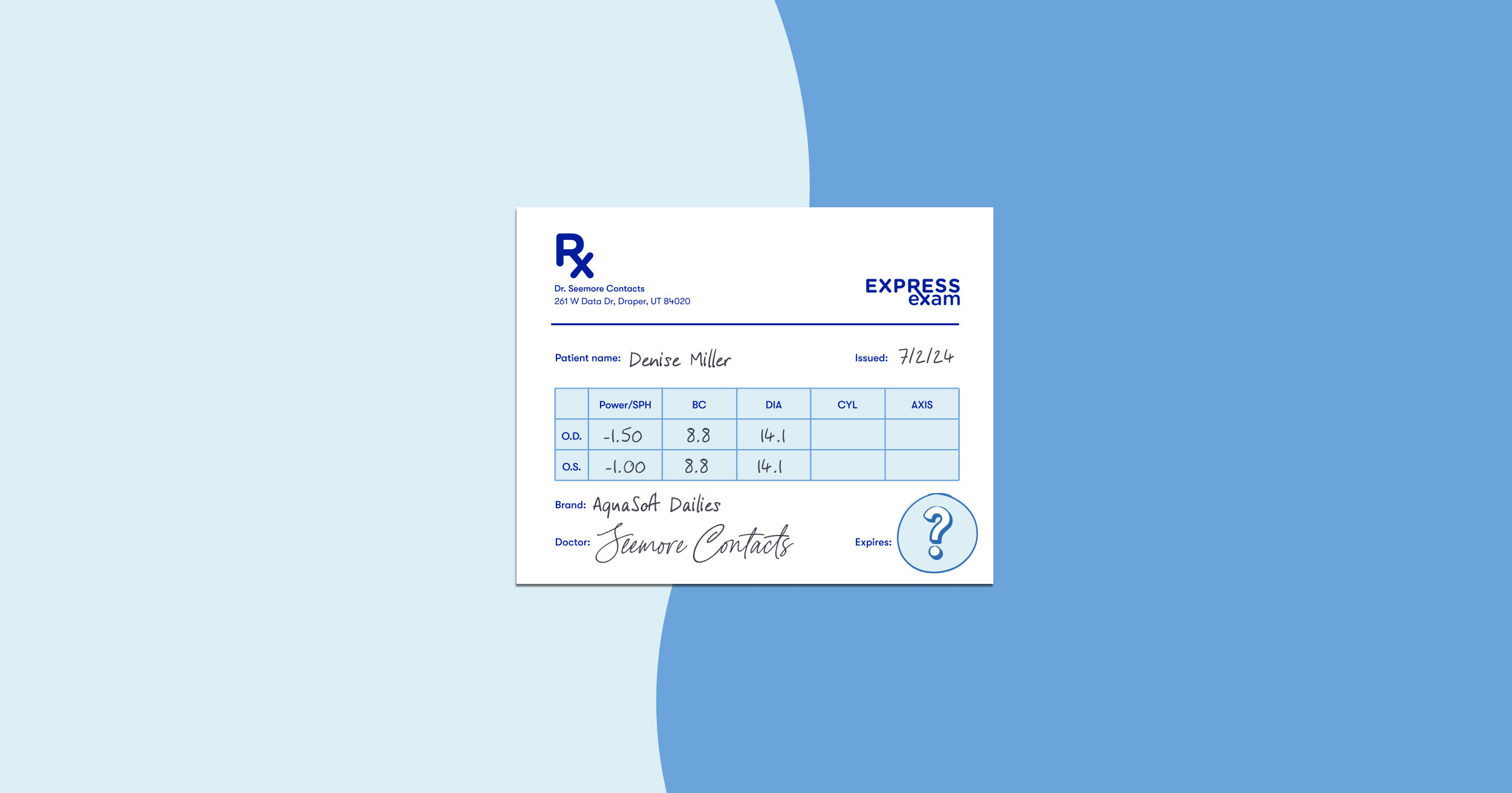
How long is my prescription good for?
Can I order contact lenses with an expired prescription?
Did you know you can order contacts online?
Say goodbye to trips to the eye doctor and hello to convenience! With 1-800 Contacts, you can easily order your contact lenses online and have them delivered straight to your door. Plus, our online vision exam makes it simple to get the prescription you need without leaving home. And the best part? You’ll save money on your first order with 1-800 Contacts. It’s never been easier to get your contacts!