


What are common reasons to see an eye doctor?
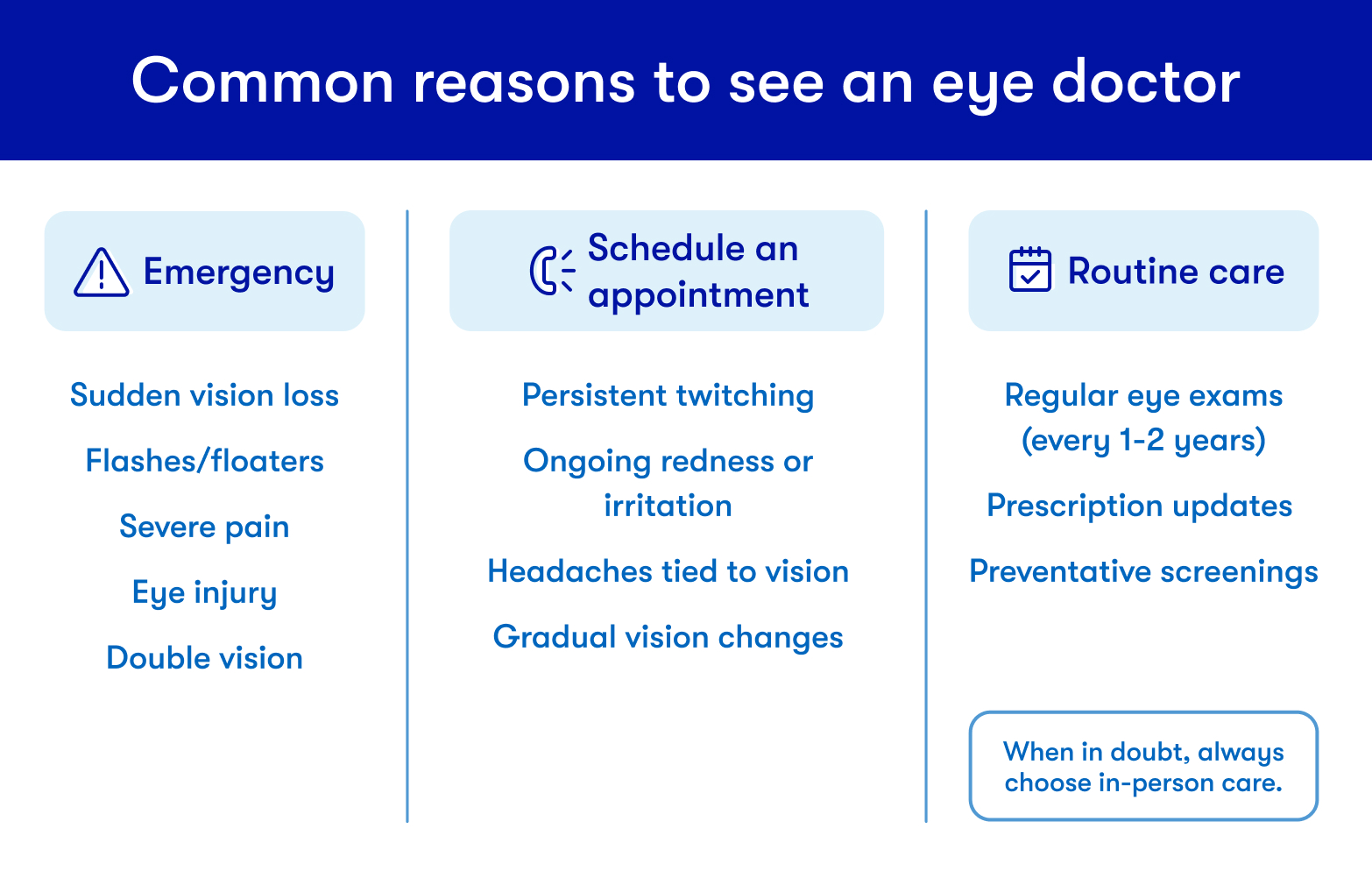
Common reasons to see an eye doctor include emergency symptoms (eye injuries or sudden vision changes), routine preventive care, persistent eye twitching, and vision changes that require a prescription update. Basically, if your eyes are acting even a bit sus, it's important to schedule an appointment.
Whether you're dealing with something urgent or due for a routine checkup, your eye doctor can help you protect your vision. In this guide, we'll answer the question that's been on everyone's minds: What are common reasons to see an eye doctor? You'll also learn how to figure out if you need a quick vision test or a complete eye exam. Yes, they're different. Getting the right one is essential to keeping your eyes healthy and your vision sharp.
Emergency eye symptoms
Medical dramas are all about high-stakes surgery and gnarly accidents. You rarely see a fictional patient with an eye problem, but the truth is that some eye symptoms absolutely qualify as emergencies.
If you experience any of the following, contact your eye doctor immediately or head to your nearest emergency room:
-
Sudden loss of vision in one or both eyes
-
Diminished night vision
-
Flashes of light or a sudden increase in floaters
-
Eye pain that doesn't resolve on its own
-
Frequent unexplained headaches
-
Significant eye injury from a foreign object, chemical, or physical impact
-
Sudden double vision or distorted vision
-
Severe redness, swelling, or discharge
These symptoms can signal serious underlying issues. This isn't the time to consult Dr. Google or hope the problem goes away on its own. If you're unsure who to see for eye problems, start with an ophthalmologist.
Routine vision checkups and preventive care
Even without symptoms, you should still see an eye doctor regularly. Just like your primary care provider checks your cholesterol and monitors your weight, an eye doctor can watch for gradual changes in your vision. They can also test for increased eye pressure and other hidden issues.
If you don't have any risk factors, such as a family history of macular degeneration or a personal history of diabetes, you should have an eye exam every 5 years while you're under 40. The American Academy of Ophthalmology recommends getting more frequent exams if you're older, as the risk of certain eye problems increases with age.
Routine exams help detect some conditions before they appear, including:
-
Macular degeneration (MD). MD is an age-related loss of central vision, which is your straight-ahead sight (not your side vision).
-
Glaucoma. Glaucoma is a group of diseases that can damage the optic nerve. You need healthy optic nerves for your eyes to communicate with your brain.
-
Diabetic eye disease. Diabetic eye disease is a broad term for a group of eye problems that can develop in people with diabetes. Uncontrolled blood sugar can damage the vessels in your eyes, increasing the risk of this complication.
-
Age-related vision changes. It's normal for your vision to change as you get older. If you find yourself squinting at books or pushing your glasses to the tip of your nose to see better, it's time for an eye exam.
-
Prescription changes. As your eyes change, so does your lens prescription. A thorough exam helps determine the right power, base curve, and diameter for each lens.
Think of it this way: Your eyes don't have a "bat signal" to warn you when there's something wrong (that would be cool, though). Regular visits help catch eye issues before they cause problems. Exam timing depends on age and risk factors, so follow your provider's recommendations.
Renew your prescription online with ExpressExam Renew your prescription online with ExpressExam 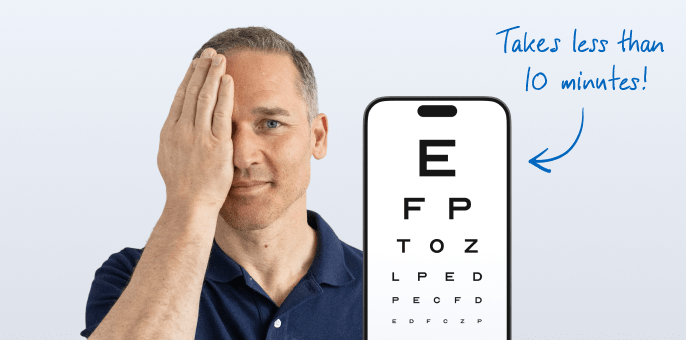
Get an online vision exam from 1-800 Contacts
Get an online vision exam from 1-800 Contacts
When to see a doctor for eye twitching
Occasional eye twitching is usually harmless. It's triggered by fatigue, stress, too much caffeine, and too much screen time. If you've been chugging energy drinks while juggling 100 open browser tabs, you might want to dial it back a bit.
But when to see a doctor for eye twitching comes down to severity and duration. Schedule an appointment if the twitch:
-
Spreads to other parts of your face
-
Lasts for more than 1 week
-
Comes with redness, swelling, or discharge
-
Interferes with your daily activities or vision
-
Causes your eye to close completely
Most twitching resolves on its own, especially if you tweak your lifestyle to include more sleep and less espresso. However, you should have an eye doctor evaluate any persistent symptoms.
When to see an eye doctor for a vision test vs. eye exam
A vision test and a comprehensive eye exam are two different things. Vision tests help determine how well you see at varying distances, while a comprehensive exam evaluates your overall eye health. It's kind of like checking your oil versus having your car inspected by a mechanic.
They're both important, but they have different objectives:
-
Online vision test. An online vision test is best for routine prescription renewals in people with no new symptoms. You can complete this test from the comfort of your own home (pajamas and slippers encouraged!).
-
In-person eye exam. You need an in-person exam if you're experiencing new symptoms, have an eye injury, or need a complete evaluation of your eye health. In-person exams are also essential for first-time contact lens fittings.
The distinction matters when you're thinking about vision tests and when to see an optometrist. If you just need a prescription update, an online vision test fits the bill, but if anything feels off, an in-person visit is the safer bet.
Symptoms that require a visit to your eye doctor
Knowing when to see an eye doctor in person comes down to one key question: Are your symptoms routine or urgent? Routine vision changes and prescription renewals can often be handled with an online vision exam, while new symptoms, injuries, or persistent issues may warrant an in-person visit. You should never ignore emergency symptoms, such as severe pain, eye trauma, or sudden vision loss.
It's also helpful to know which type of eye doctor to see depends on your situation. Some providers specialize in vision correction, while others handle diabetic eye disease, glaucoma, and other medical eye conditions.
If you're not sure where to start, 1-800 Contacts can help. We offer online vision exams and make it easy to find eye doctors who can provide in-person care near you.
Eyes don't normally get the credit they deserve, but that changes today. Paying attention to subtle vision shifts, getting routine exams, and knowing when to seek professional help can make all the difference in preserving your eye health over time.
Consider this a sign to check on your eye health sooner rather than later. And when you have a shiny new lens prescription in hand, head to 1-800 Contacts to find your preferred brand.
With everything you can do online these days, it only makes sense that you can renew your contact lens prescription. How do online eye exams work? How long is a prescription good for? Find out when yours expires and how to renew it within minutes. Don’t let an expired prescription leave you squinting. Can you get contacts without a prescription? No. But all is not lost. Find out more about getting contacts. Everything you need to know about online vision exams

How ExpressExam really works
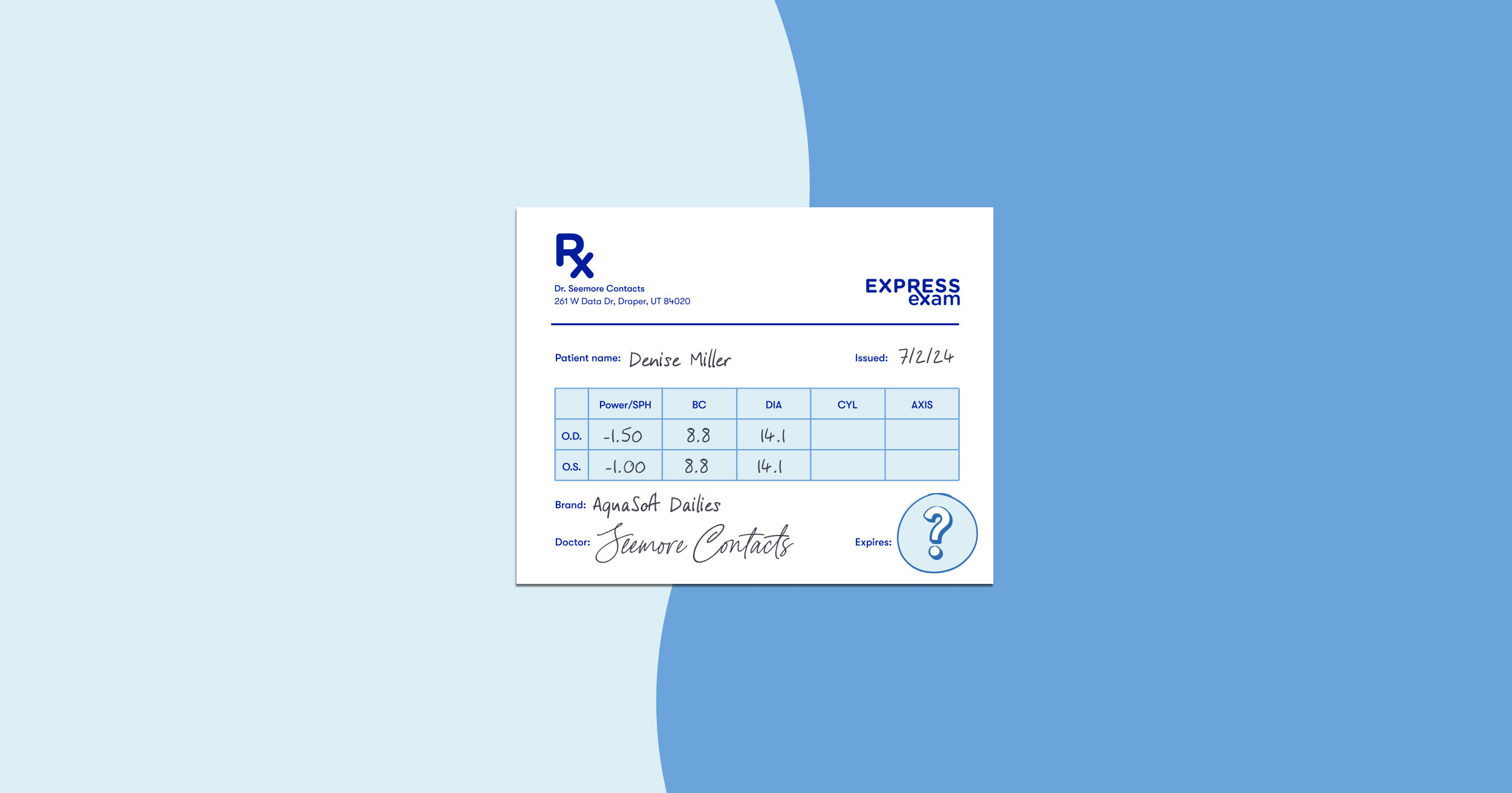
How long is my prescription good for?

Can I order contact lenses with an expired prescription?
Original publish date: 7/29/2024
Updated date: 5/18/2026